With a soft whoosh, a tube-launched folding-wing UAV shot straight into the sky. Apart from the biting wind, everyone present held their breath, waiting quietly. When the UAV instantly achieved vertical launch, unfolded its morphing wings, leveled its attitude, and maintained altitude flight, cheers and excitement erupted and spread through the cold wind. This was the first time in Chinato complete the ground-based hard-supported tube-launched vertical cold launch and morphing-to-level flight verification of a small folding-wing UAV. The person who accomplished this is from our Northwestern Polytechnical University Institute of Unmanned Systems Technology. outstanding young teacher – Chang Min.
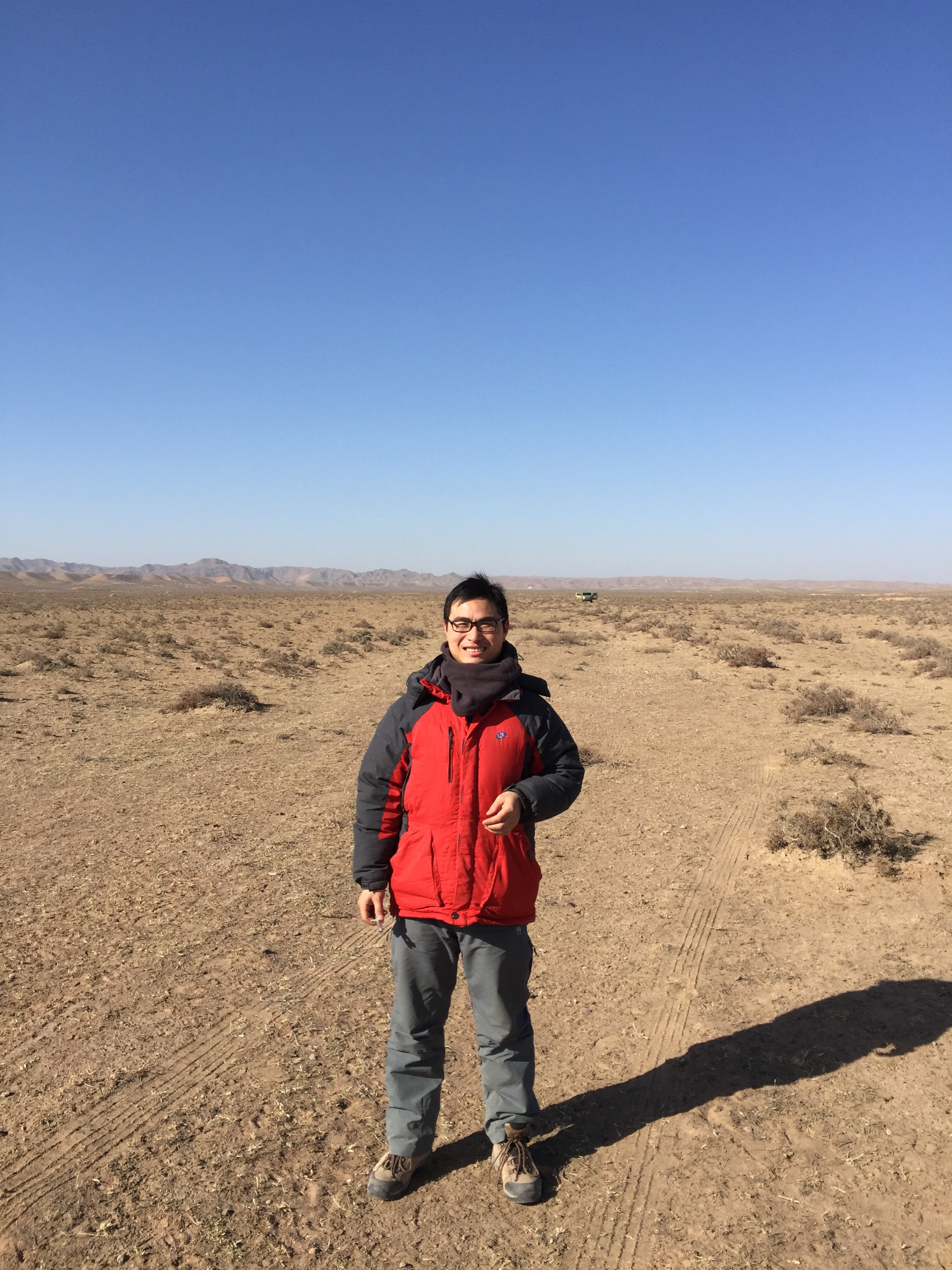
图1 Figure 1 Professor Chang Min at the test site
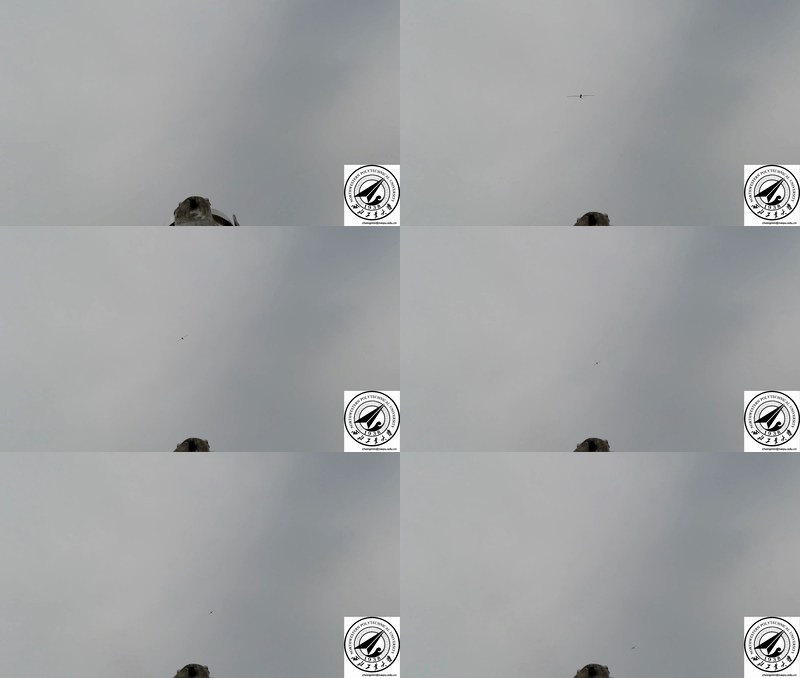
图2 Figure 2 Ground-based Hard-Supported Tube-Launched Vertical Cold Launch and Morphing-to-Level Flight Test of a Small Folding-Wing UAV
Cultivating Talents in Real-World Practice
In 2017, the Institute of Unmanned Systems Technology was officially established, beginning its exploration of diversified talent introduction models. As an outstanding talent and rising star in multi-domain unmanned systems technology, including tube-launched folding-wing UAVs, bionic micro-nano UAVs, and urban air vehicles, Professor Chang was recruited from NORINCO 203 Institute as one of the first faculty members. During the institute’s early, challenging days, Professor Chang identified the main development direction for future unmanned systems based on major national needs and actively participated in the institute’s independent cross-disciplinary program argumentation and application. These efforts bore fruit in 2018 with the official establishment of the ‘Intelligent Unmanned Systems Science and Technology’ interdisciplinary program, and Professor Chang successfully became a master’s supervisor, embarking on his long-cherished journey of ‘cultivating national strategic assets.’
‘What is learned from books is ultimately shallow; to truly know, one must practice.’ Professor Chang said: ‘The biggest fear in cultivating students is armchair theorizing and working in isolation! Students should grow through real-world practice.’ He practiced what he preached. In seminars and at test sites, Professor Chang led his students to extract scientific problems from applications and understand theoretical knowledge through practice.
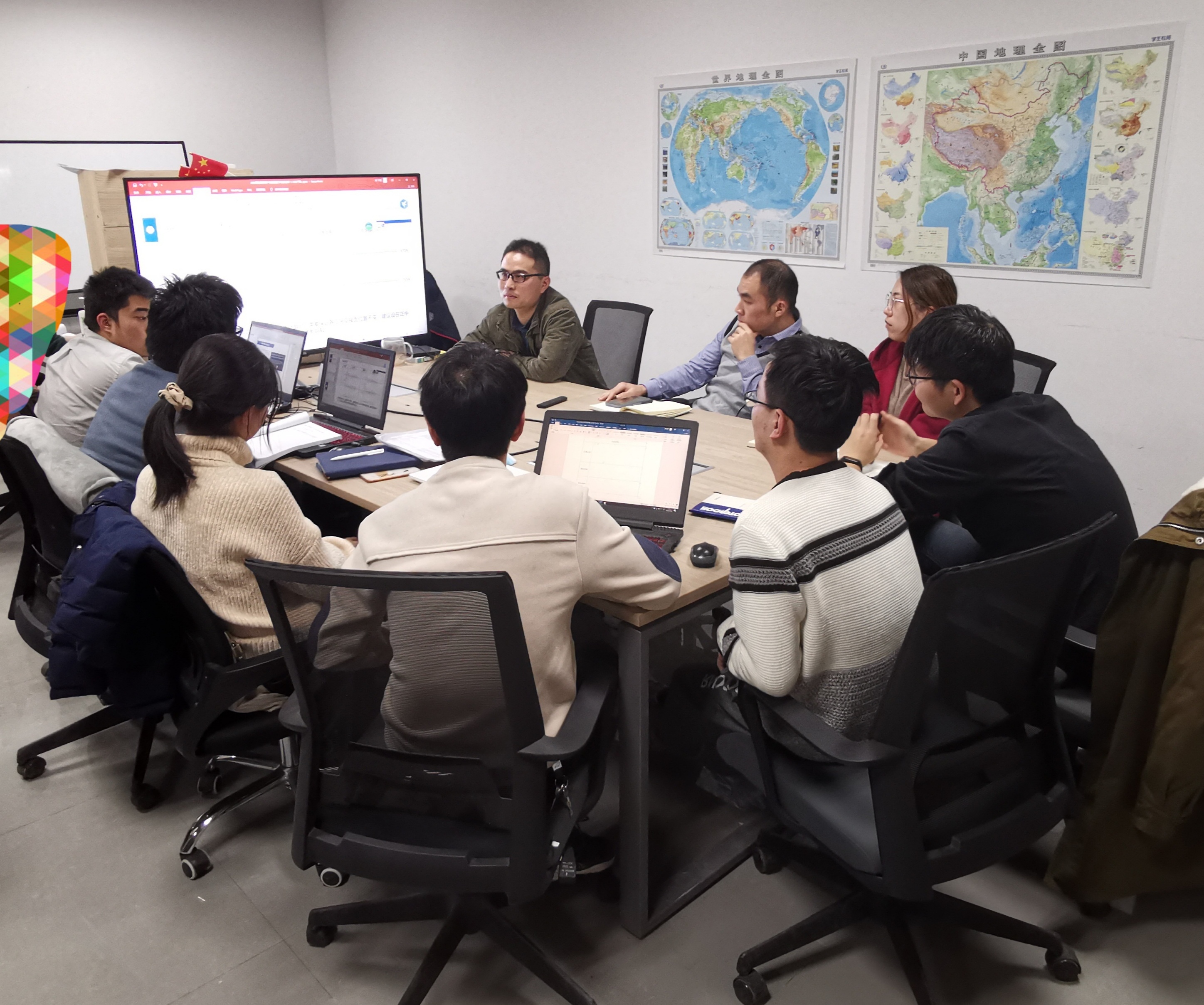
Figure 3 Professor Chang Min leading students in regular academic exchanges
‘Setting an example through one’s conduct, and with wholehearted sincerity, cultivating talents.’ This is Professor Chang’s motto and a true reflection of him. In just three years, he has guided multiple undergraduate and master’s students to complete their graduation projects in the overall design and integrated verification technology of multi-domain, multimodal intelligent unmanned systems. In the 6th China Graduate Future Aircraft Innovation Competition, his supervised student team won both the first prize and the physical demonstration award, and Professor Chang himself received the honorary title of ‘Outstanding Instructor.’ He pours his passion into the great cause of moral education, and with his silent influence, a promising future is assured.
Multi-Domain Research Unfolds a Grand Blueprint
‘Multi-domain warfare’ is one of the important development trends in future warfare. Small unmanned systems in ‘multi-domain warfare’ serve as accompanying combat equipment, significantly empowering combat systems and main battle platforms. However, due to multi-domain interconnections across air/space/sea/land, unmanned systems exhibit characteristics such as multi-modality, multi-domain capability, and adaptability. Professor Chang focused his research on the challenging area of overall integrated design and integrated verification technology for multi-modal unmanned aerial vehicle systems, achieving numerous breakthrough results.
Based on the optimal circulation self-trim design concept, Professor Chang’s proposed overall/aerodynamic integrated design method for dual-mode tail-sitter vertical take-off and landing (VTOL) UAVs, which considers propeller nacelles, significantly increased the cruise lift-to-drag ratio by 52% in trimmed flight, greatly improving flight performance such as dual-mode switching, endurance, and flight speed. After multiple land-based and ship-based flight verifications, several key performance indicators of this UAV are significantly superior to the US Navy’s tail-sitter VTOL V-BAT UAV. The research results have been applied in patrol and surveillance missions on certain islands and reefs in the South China Sea.
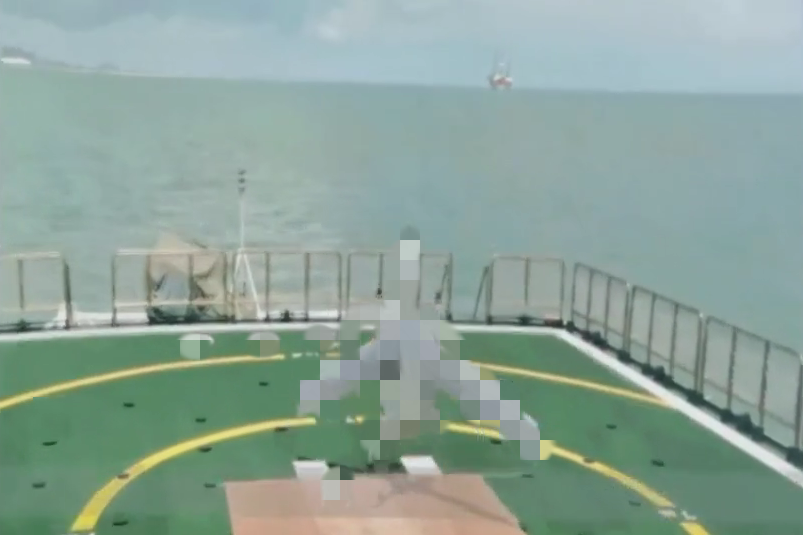
Figure 4 A certain tail-sitter VTOL UAV taking off from a ship (Mosaic processed)
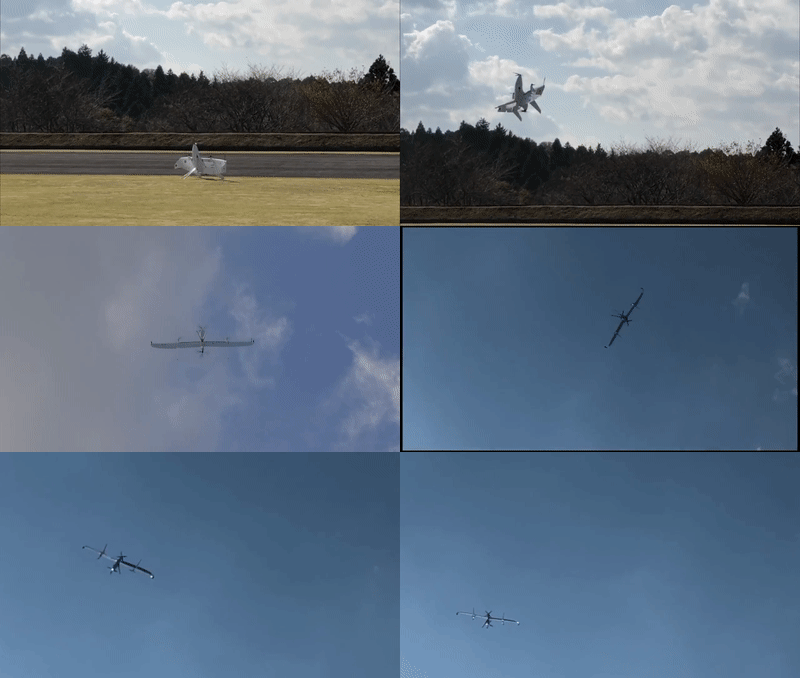
Figure 5 Vertical take-off process of a tail-sitter VTOL UAV (From the internet)
He also developed an overall integrated design method for dual-mode tube-launched folding-wing UAVs under strong size constraints. Tube-launched folding-wing UAVs are folded within narrow, slender tubular spaces, where the aerodynamic layout, morphing folding structure, and propulsion system constrain each other, collectively affecting UAV flight performance. Professor Chang established a parameterized model for UAV layout under strong geometric constraints of the launch tube, targeting parameters such as long endurance and long range. He studied rapid deployment folding patterns and the flow mechanisms of irregularly shaped folded bulges, resulting in an innovative ‘Z’-shaped layout. This achieved an efficient aerodynamic layout, lightweight morphing structure, high-efficiency propulsion, and stable transition control during launch. After several tube-launched flight tests, the effectiveness of this integrated design method was verified, and this achievement has been applied to multiple types of equipment in our military, empowering and enhancing combat capabilities.
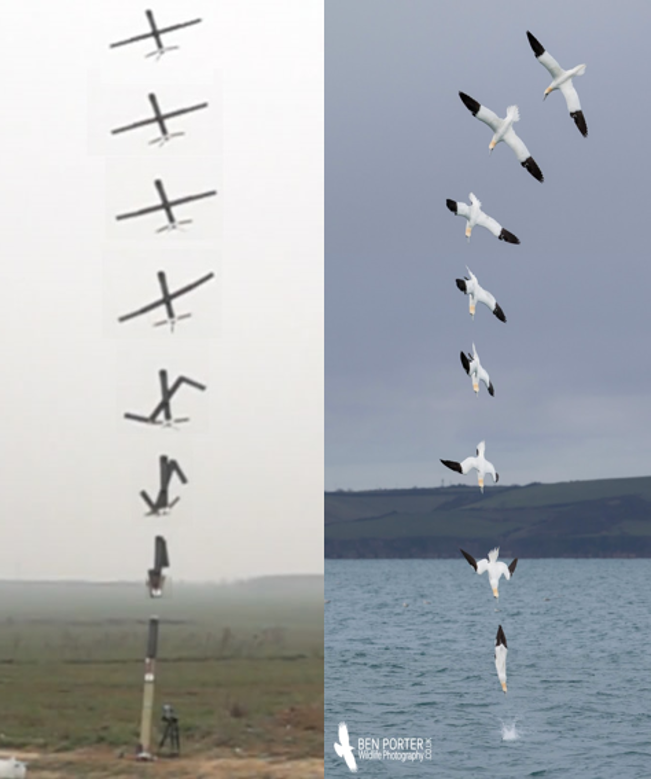
Figure 6 Bio-inspiration for Tube-Launched Folding-Wing UAVs
Another significant breakthrough lies in the overall integrated design method for multi-modal perching micro-UAV systems. This research, inspired by creatures such as birds and bats, addresses issues like short mission times for micro-UAVs used in special operations due to their small size and light weight. The proposed multi-scenario perching micro-UAV solution integrates functional and morphological bionics, emphasizing an overall/propulsion/perching integrated design method, interdisciplinary integration, and microsystem fusion, with performance closely matching actual needs. The project’s research results will be applied in urban counter-terrorism, disaster search and rescue, personal safety protection, and other areas.
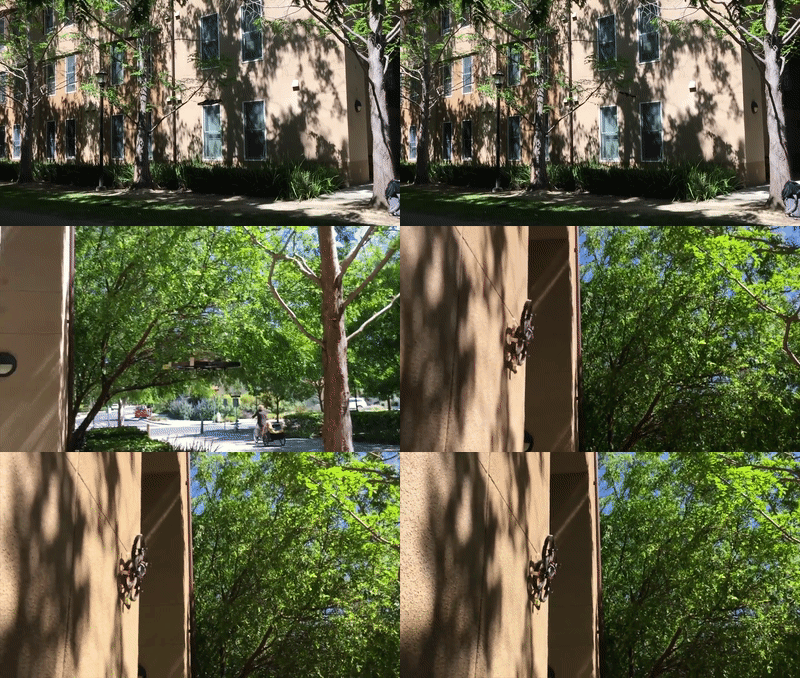
Figure 7 Animated GIF of a micro-UAV perching on a wall (From the internet)
I shoulder the responsibility for the unmanned frontier.
In the three years since joining the faculty, Professor Chang has tirelessly pursued scientific research, achieving fruitful results. He has been approved to lead 7 national key projects. He has published 9 academic papers as the first author, including 3 indexed by SCI and 5 by EI. As a member of the editorial board for “Intelligent Control: Methods and Applications” published by China Science and Technology Press, he authored Chapter 23, “Applications of Intelligent Control in UAVs.” Additionally, he has applied for a total of 17 invention patents and utility model patents as the first author, including 1 granted invention patent, 12 pending invention patents, and 4 granted utility model patents.
On the path of developing intelligent unmanned systems science, Professor Chang forges ahead with pure passion; in the endeavor of cultivating outstanding talents for the nation, he shoulders heavy responsibilities and leads the way. “No distractions, no hesitation, no fear, unstoppable; with faith, with ideals, with strength, I take responsibility” – this New Year’s inscription from the Unmanned Systems Technology Research Institute perfectly describes Professor Chang’s unwavering dedication to serving his country. He does not seek worldwide fame, but rather tangible results. Paving the way for young talents and conducting research for national prosperity – this might be Professor Chang’s “pure love, only for China!”
Text by: Li Yaxi, Chang Min, Miao Ying
Photo by: Chang Min
Reviewed by: Xu Xiaofeng