To implement the ‘Northwestern Polytechnical University First-Class Undergraduate Talent Cultivation Action Plan’ and promote classroom teaching reform, the Institute of Unmanned System Technology, based on its ‘Integrated Domain’ Lecture Hall, successfully held a distinctive brand event: the ‘Integrated Education’ Forum and the 19th-24th series of lectures by renowned experts on Flexible Bioelectronics Technology.
This series of activities ran from September 23 to October 28, 2024, inviting six young experts and scholars from renowned domestic universities to share their latest research achievements in flexible bioelectronics technology online. Students from our university’s Schools of Materials, Aeronautics, Astronautics, Mechatronics, Mathematics and Statistics, Automation, Marine Science and Technology, Computer Science, Cyber Security, Life Sciences, Power and Energy, Queen Mary University of London Engineering School, Software, Electronic Information, and others participated. Additionally, scholars from institutions such as Beihang University, Tsinghua University, Shanghai Jiao Tong University, Xi’an Jiaotong University, Southeast University, and Chongqing University also participated in the online discussions.
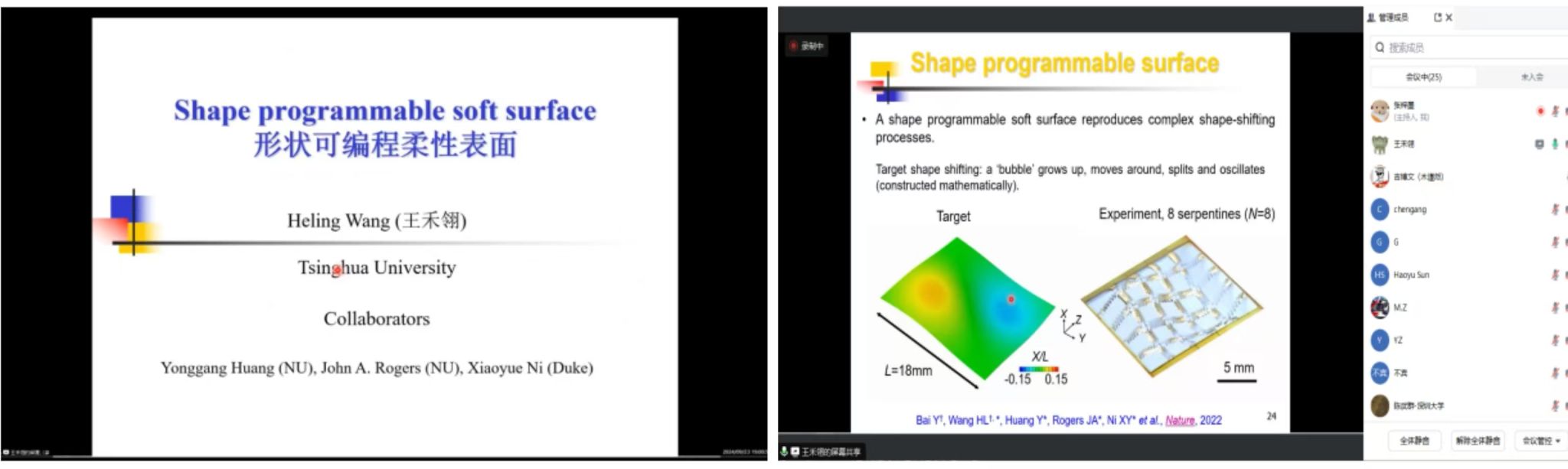
Associate Researcher Wang Heling, Tsinghua UniversityIntroduced a shape-programmable flexible surface driven by electromagnetic force, which generates distributed currents via multiple independently controllable port voltages, driving significant deformation of the flexible surface in a magnetic field. He also explained the development of a solid mechanics theoretical model to establish the mapping relationship between target shapes and port voltages, enabling rapid programming of the same flexible surface to replicate time-varying target shapes. Finally, he pointed out that this shape-programmable technology is expected to be applied in metasurfaces, metamaterials, flexible morphing robots, and other fields.
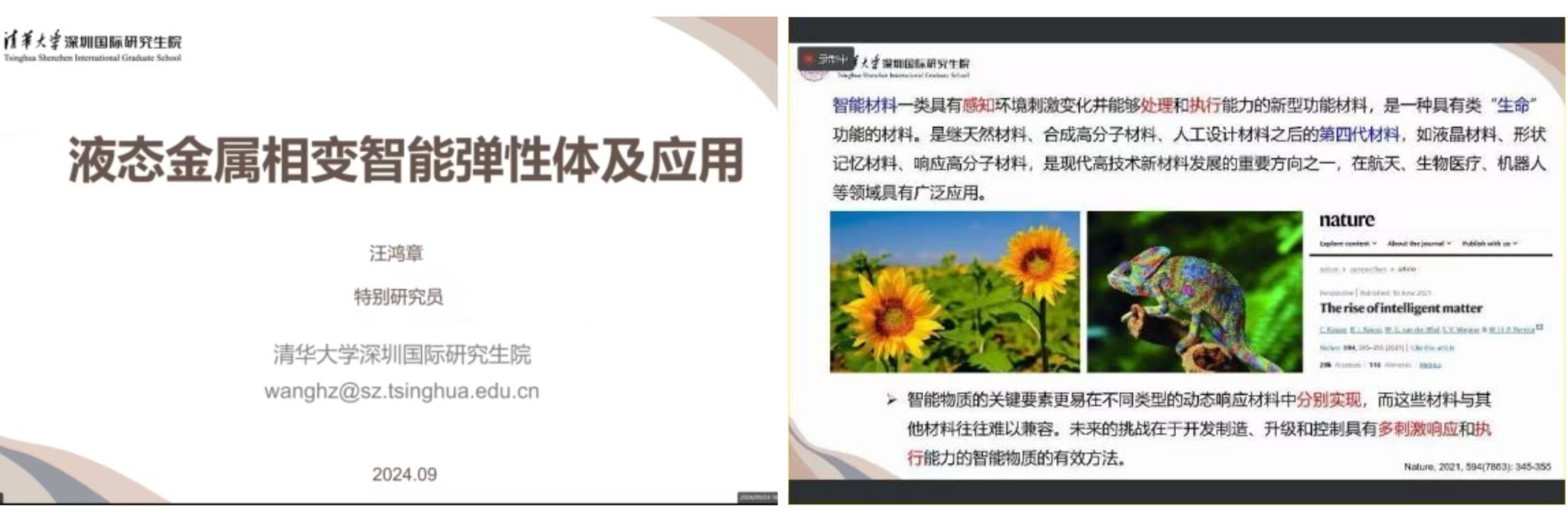
Distinguished Research Fellow Wang Hongzhang, Tsinghua UniversityDiscussed research on liquid metal phase change intelligent elastomers and soft robots, noting the increasing attention given to room-temperature liquid metals as materials with unique physicochemical properties. He focused on the multi-stimuli-triggered phase change behavior of liquid metal elastomer materials and explored how to expand their applications in intelligent sensing, soft robotics, energy storage, and other fields through performance regulation.
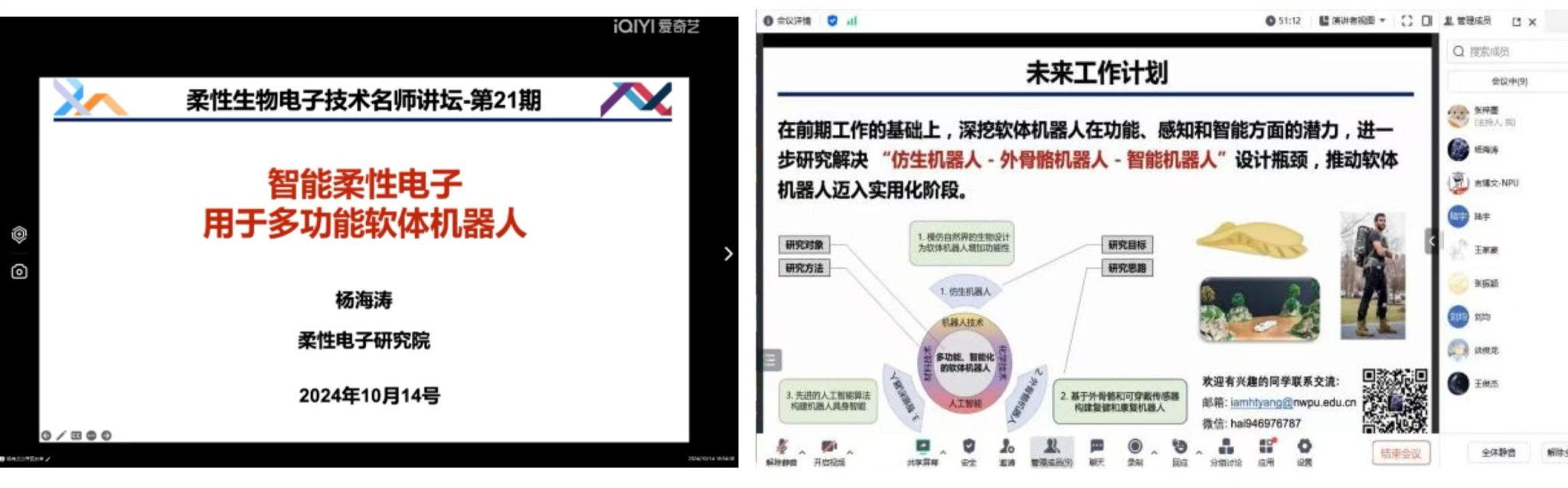
Professor Yang Haitao, Northwestern Polytechnical UniversityIntroduced how intelligent flexible electronics are used in multifunctional soft robots, noting that breakthrough technologies in actuation, sensing, protection, energy, communication, and intelligence have brought comprehensive functional systems to soft robot development. The report reviewed recent progress in soft robot multifunctionality, focusing on flexible electronics development, and proposed future trends for soft robots.
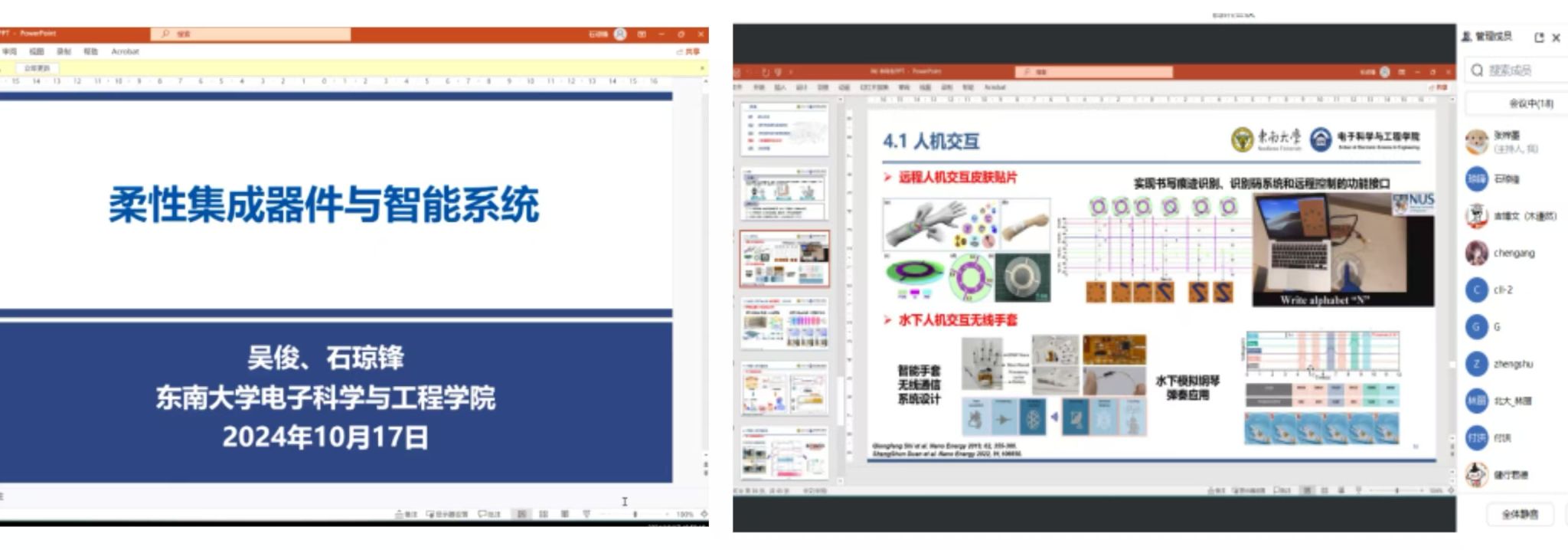
Professor Wu Jun, Southeast UniversityAnalyzed flexible integrated devices and intelligent systems, aiming for performance optimization of flexible sensing devices, multimodal and multifunctional intelligent integration, and case-based applications of human-machine symbiotic systems. He discussed how intelligent human-machine interface technology must overcome differences between human neural and device electrical signals, and emphasized the need to promote manufacturing next-generation autonomous intelligent AI terminals and establish future human-machine collaboration application demonstrations.
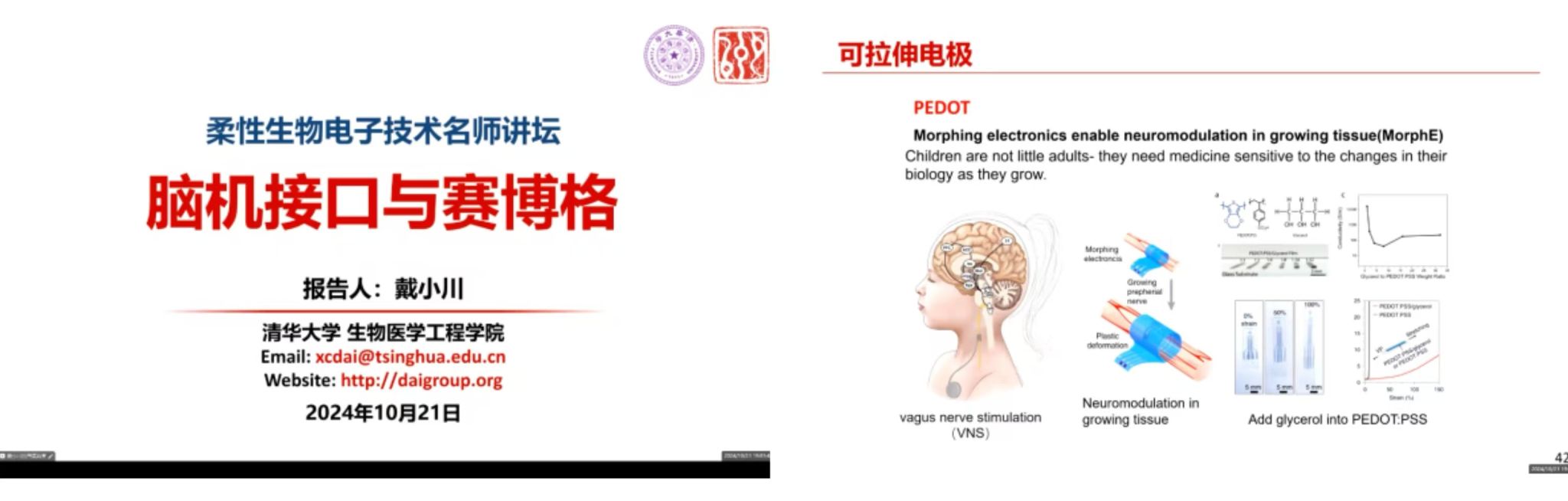
Assistant Professor Dai Xiaochuan, Tsinghua University First, he explained the definition, basic knowledge, and current research and application status of brain-computer interface technology. He then analyzed specific cases in different fields, technical challenges, and coping strategies. Finally, he looked forward to future development directions.
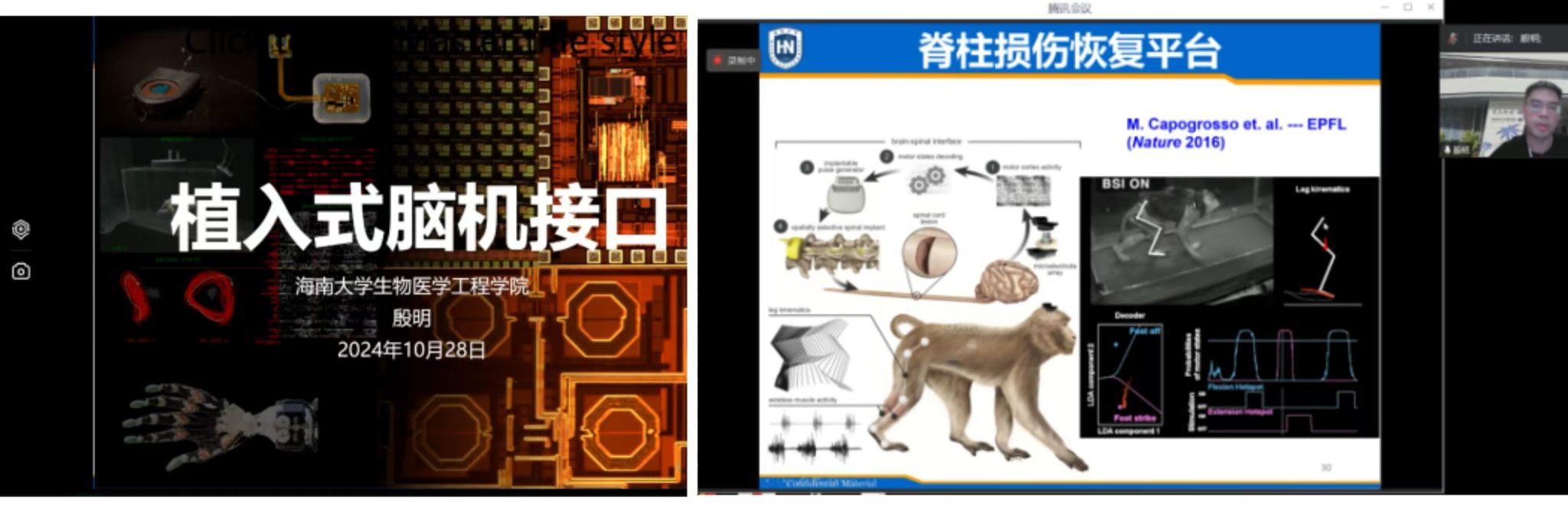
Professor Yin Ming, Hainan University It is explained that combining modern microelectronics with high-end integrated chip processes to design and produce dedicated high-throughput brain-computer interface “System-on-Chip” (SoC) is an inevitable trend. Drawing on our experience in BCI chip design and starting with independently developed high-throughput neural acquisition and regulation chips, we introduced our work on developing a new generation of BCI chips with independent intellectual property, featuring high throughput, high sampling rate, low power consumption, miniaturization, and high integration for neural signal acquisition and regulation.
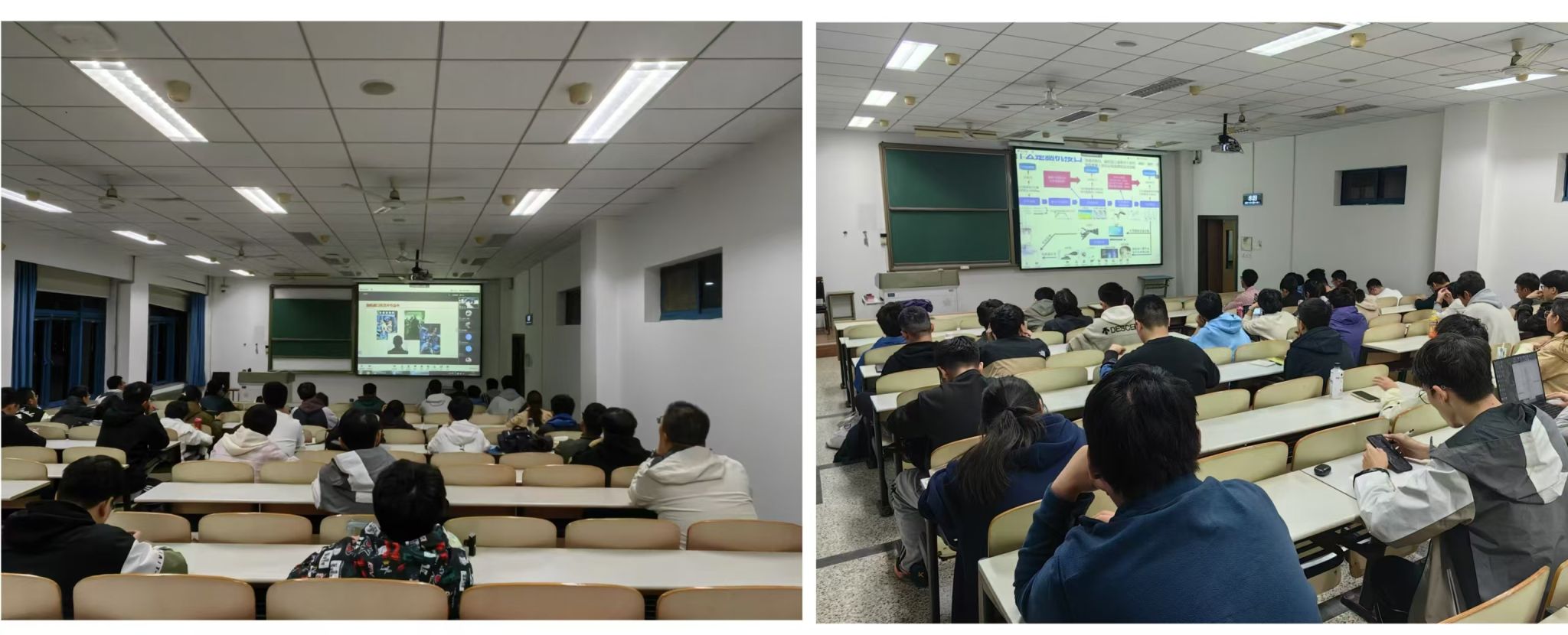
This event aimed to promote classroom teaching reform and stimulate our students’ interest in flexible bioelectronics technology. Students actively participated, responded enthusiastically, and gained a lot. Qian Baichuan, an Aerospace Engineering student, stated: “This lecture deepened my understanding of shape-programmable flexible surfaces and liquid metal phase-change intelligent elastomers. The cutting-edge applications of flexible electronics in multifunctional soft robots greatly inspired me and provided new ideas for future studies.” Zhuang Zhicheng, an Information Science student, commented: “The lecturer explained intelligent flexible electronics in implantable brain-computer interfaces and cyborg technology. As a freshman, the easy-to-understand explanation exposed me to much cutting-edge knowledge, and I benefited greatly.” Lu Yiming, a student from the School of Mechatronics, shared: “These reports provided a deep understanding of flexible integrated devices and intelligent systems in neural electrodes and soft robotics, inspiring me to integrate these technologies into future research.”
The institute will further utilize the “Rongyu” Lecture platform to invite experts and scholars from more fields for exchanges, deeply advance the work of cultivating virtue and educating people, and actively promote our university’s “Double First-Class” construction to a new level.
(Text: Zhang Zimo, Ji Bowen; Reviewed by: Xu Xiaofeng)